Hoasca Tea
The União do Vegetal utilizes Hoasca Tea (also known as ayahuasca) in its religious ritual, in which members drink the tea for the purpose of mental concentration.
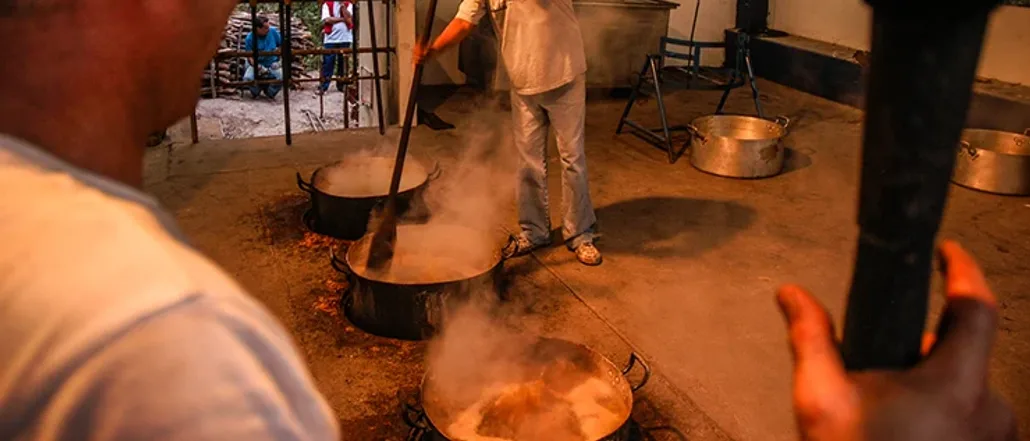
The Beneficent Spiritist Center União do Vegetal utilizes Hoasca Tea (also known as ayahuasca) in its religious ritual, in which members drink the tea for the purpose of mental concentration. The tea is the result of boiling together two plants originating from the Amazon rainforest: a vine, Mariri (Banisteriopsis caapi), and the leaves from a small tree, Chacrona (Psychotria viridis). In the UDV, Hoasca Tea is also called “Vegetal”.
The plants and the tea are proven harmless to the health, according to scientific studies by renowned entities.
José Gabriel da Costa, Mestre Gabriel, came into contact with the Hoasca Tea in 1959. In 1960, he prepared it for the first time and began to distribute it of his own initiative. In 1961, he created the União do Vegetal and began to show his disciples how to prepare the tea. Currently, the Vegetal is prepared at the General Headquarters and at the Núcleos of the UDV all over Brazil. In these locations, Mariri and Chacrona are also cultivated.
Scientific research on the Hoasca Tea, Mariri and Chacrona is followed by UDV Ciência, whose Virtual Library gathers articles, theses and books (in Portuguese and English).
Keep reading
- Mariri and Chacrona The Mariri vine and the Chacrona tree are native to the Amazon rainforest and are used by the União do Vegetal in the preparation of Hoasca Tea.
- Scientific research Harmless to health Scientific research confirms the word of Mestre Gabriel: Hoasca Tea is harmless to the health.
- Scientific research Hoasca Project The Hoasca Project was the first study conducted to assess the long-term effects of Hoasca Tea in human beings.
- Scientific research Hoasca in adolescence Scientific research showed that Hoasca Tea used in a ritual context poses no risk to the development of adolescents.
- Legal use of Hoasca Tea The religious use of Hoasca Tea has been fully authorized by Brazilian authorities since 1987. In 2006, the U.S. Supreme Court guaranteed the UDV the free exercise of its activities in the United States.